Home › Cataract & Refractive Surgery
Cataract & Refractive Surgery, Done to a Mumbai Standard
Cataract surgery is our highest-volume, deepest-experience procedure — and every case is also treated as a refractive opportunity: the right lens can reduce or remove your dependence on glasses, not just clear the cataract.
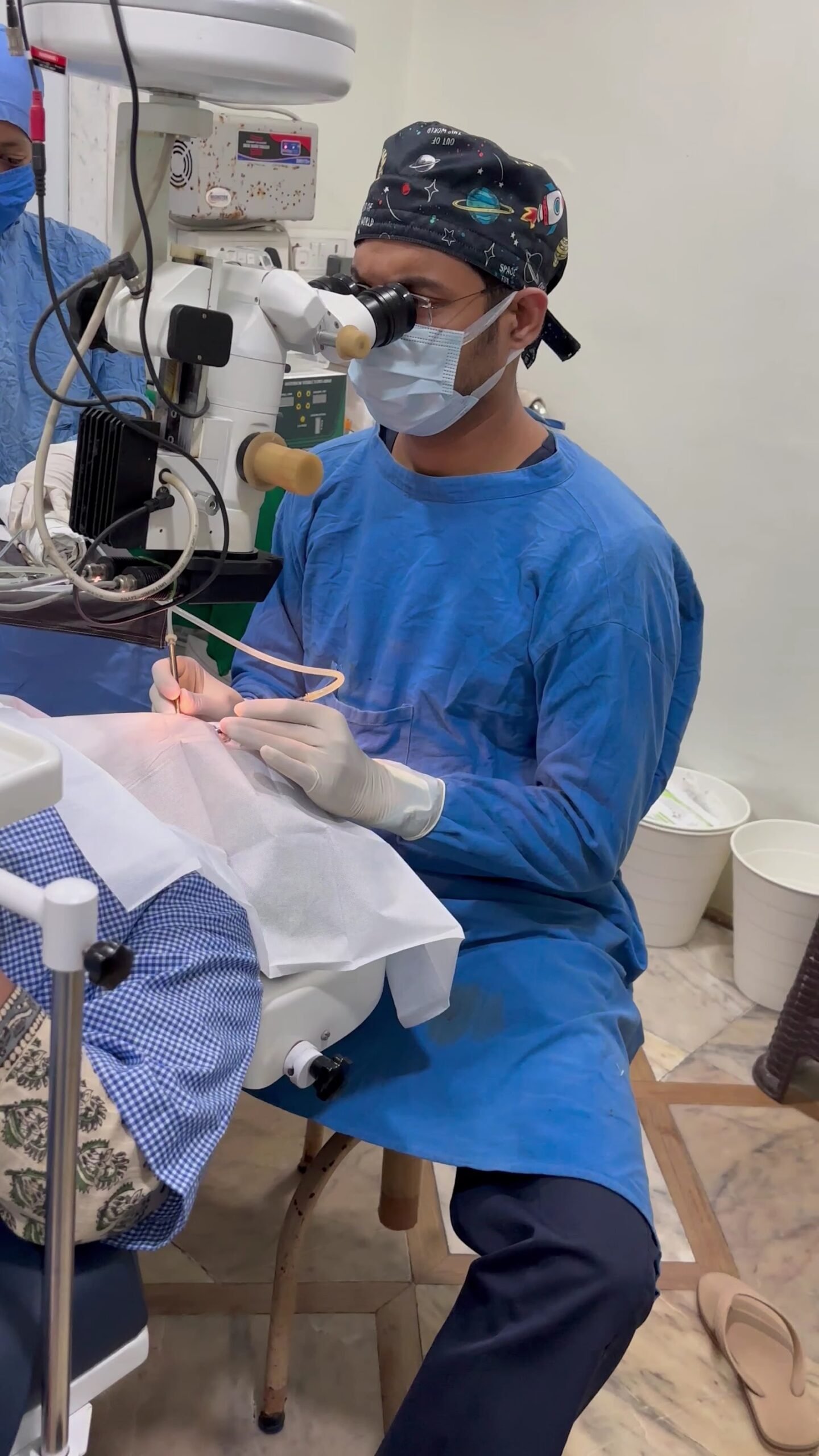
When the eye’s natural lens clouds over
A cataract is a clouding of the eye’s natural lens, usually related to age, that causes blurred vision, glare around lights, and colours that look faded. It develops gradually — which is why many patients wait far longer than they need to before treatment. Cataract surgery removes the clouded lens and replaces it with a clear artificial intraocular lens (IOL), and is one of the most common, safest procedures in modern medicine.
Choosing the right lens for your lifestyle
Monofocal IOL
Sharp vision at a single focal distance (typically far). The standard, well-established option, generally covered by insurance. You’ll likely still use reading glasses.
Toric IOL
Built to correct astigmatism at the same time as the cataract — recommended when your cornea’s shape is significantly irregular, for sharper uncorrected vision after surgery.
Premium Multifocal IOL
Designed to reduce dependence on glasses across near, intermediate, and far distances — the closest option to full spectacle independence for the right candidate.
Which lens fits you depends on your corneal measurements (taken with our Mediworks optical biometer), retinal health, and how you actually use your eyes day to day — we walk through this with you before any decision is made, in plain language.
Daily surgical volume, precision technology
- Cataract surgery performed daily — consistent, hands-on experience with routine and complex cases
- Stellaris Elite phacoemulsification system — a premium, precision surgical platform used at top-tier centres
- Mediworks optical biometry for accurate IOL power calculation, critical for toric and premium lenses
- Full IOL range — monofocal to premium toric and multifocal
- Live OT streaming — watch a real procedure before you decide
- Cashless insurance processing for approved cases
Recovery, honestly explained
Mild irritation and watering on day one is normal. Vision typically improves noticeably within the first few days, and most patients report significant stabilization by weeks 2–4. We schedule follow-ups rather than leaving recovery to guesswork.
Read the full recovery timeline →Cataract & Refractive Surgery — Questions Patients Ask
What’s the difference between cataract surgery and refractive surgery?
Cataract surgery removes the eye’s clouded natural lens and replaces it with an artificial intraocular lens (IOL) — it’s a medical necessity once a cataract affects vision. Refractive surgery (like LASIK, or choosing a premium IOL during cataract surgery) is about correcting or reducing dependence on glasses. At Abhijit Eye Clinic, cataract surgery itself is a refractive opportunity: the IOL you choose can also correct long-standing short-sightedness, long-sightedness, or astigmatism at the same time.
Which IOL (lens) is right for me — monofocal, toric, or multifocal?
It depends on your eyes and your lifestyle. Monofocal lenses give sharp vision at one distance (usually far) and are covered by most insurance. Toric lenses correct astigmatism specifically. Multifocal/premium lenses aim to reduce dependence on glasses for both near and far vision. We walk through your corneal measurements, retinal health, and daily needs (reading, driving, screens) before recommending a lens — in plain language, not just a price list.
Is cataract surgery painful, and how long does it take?
No — cataract surgery is performed under local anaesthesia (numbing drops), and most patients feel little to no pain. The procedure itself typically takes about 10–15 minutes per eye using phacoemulsification (the Stellaris Elite system), with most patients going home the same day.